
- About Us
- Board of Directors
- Sections
- Guiding Documents
- Join APA and Its Divisions
- Contact Us
- Washington Planning Awards Information
- Events & Training
- Professional Development
- Sponsorship
- Get Involved
- Resources
If They Know What We Build, They Can Plan for It
WMHA, Pacific Homes Direct and Cavco Millersburg (Palm Harbor Homes) to exhibit 391 square foot Cottage ADU at the 2026 APA Conference in Vancouver!
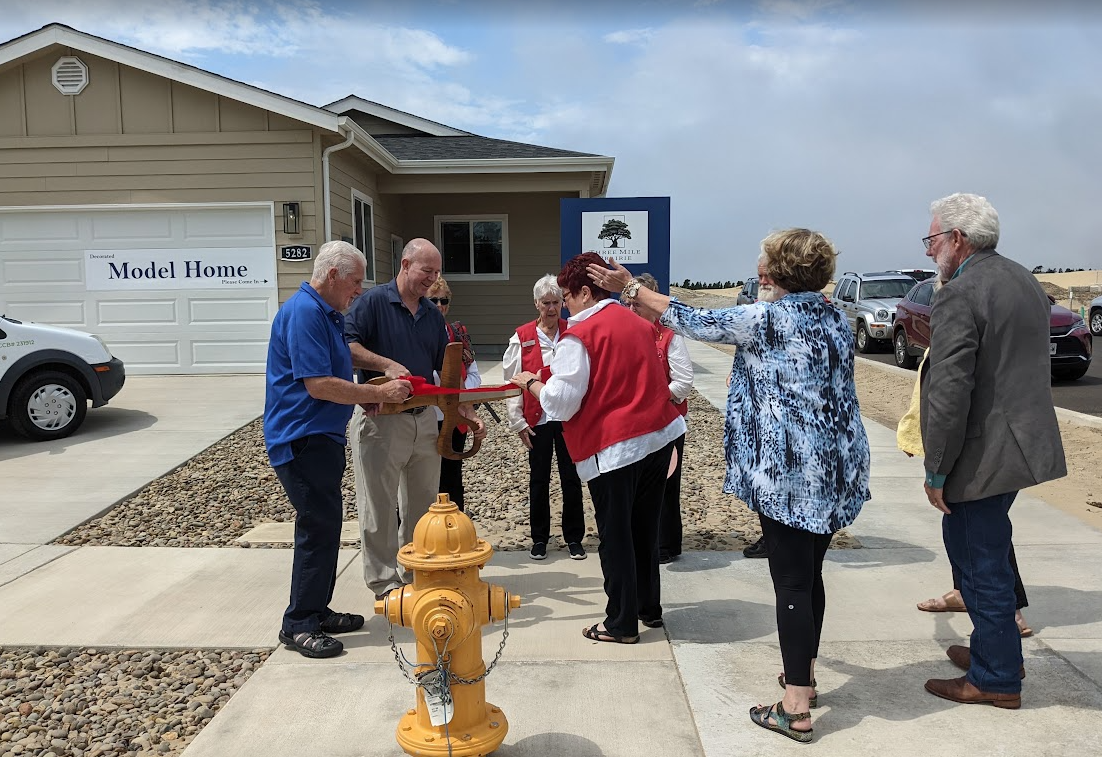
Ben Roche, Cavco Millersburg WMHA Speaker for APA Conference on October 8, 8:30 a.m. Housing Panel Manufactured housing in the Pacific Northwest has a story to tell, and one of the most important audiences may not be our customers! It is the Washington State planners, building officials, inspectors, policymakers, lenders, developers, and elected officials making decisions about how and where tomorrow’s housing will be built. Our industry has often met these professionals across a permit counter, during a code dispute, or after a zoning ordinance has already been written. By then, we are explaining ourselves from a defensive position. We should be in the room much earlier. A Housing System Unlike Any Other Manufactured housing occupies a unique place in American residential construction. Homes built to the HUD Manufactured Home Construction and Safety Standards are regulated under a federal construction and safety code that applies nationwide. Federal law specifically preempts state or local construction and safety requirements addressing the same areas covered by the federal standards, preserving the uniformity of the national system. That uniformity is one of our industry's greatest strengths. Before construction begins, designs and quality-assurance systems are reviewed through HUD-approved Design Approval Primary Inspection Agencies. During production, HUD-approved inspection agencies monitor factories and inspect homes at various stages of construction. Each transportable section ultimately receives a federal certification label representing the manufacturer's certification that it complies with the applicable HUD standards. Instead of relying solely on periodic jobsite inspections as construction progresses, much of our work takes place in a controlled manufacturing environment where materials, engineering, production processes, quality control, and inspection are integrated into a repeatable system. Instead of a post-process inspection, where you have an open-book test, and inspection to proceed, in our factories, Compliance is built into the process. Familiarity Matters Legislators and planning officials who influence housing policy often have never toured a manufactured housing plant. They may never have watched floor systems being assembled, walls framed, electrical and plumbing systems installed, insulation inspected, roofs constructed, or quality-control checkpoints documented. Their understanding of manufactured housing may instead come from homes built decades ago, or even from outdated images of the pre-HUD-Code “mobile home.” In fact, when I speak to elected officials less familiar with manufactured housing, they often believe that the majority of them are built for trailer parks, and not land development. We cannot fault people for not understanding a system they have never had an opportunity to see. That is why participation with organizations such as the Planning Association of Washington, APA Washington, local planning departments, building-official organizations, housing authorities, elected officials, and other professional groups is so important. These are the people helping shape comprehensive plans, development codes, permitting systems, and the housing policies that will determine what gets built in Washington for decades to come. Familiarity with manufactured housing should be part of that conversation. Education Before Regulation When communities face housing shortages, affordability challenges, and increasing pressure to produce more homes, manufactured housing should be considered from the beginning, not introduced as an alternative only after every other option has become too expensive. That conversation must also go beyond simply telling policymakers that manufactured homes can cost less. Understanding comes from seeing how factory construction works: the engineering behind the home, the quality-control process, the inspections built into production, and the relationship between federal standards and state and local responsibilities. It also means seeing what today's manufactured homes actually look like, the architecture, rooflines, porches, garages, exterior materials, interiors, energy-efficient features, and design flexibility available in today's market. A factory tour is one of the most effective ways to demonstrate the construction process, but education should not stop at the factory door. Invite a building official or planner to a model home center. Walk through the homes with them. Let them see the finishes, floor plans, construction quality, and range of housing choices available to today's buyer. Better yet, invite them to visit a completed home after installation. Show how the sections are joined, how the home is placed on its foundation, how utilities and exterior improvements are completed, and how the finished home fits naturally into a residential neighborhood. Seeing a home in production explains how we build it. Seeing one installed and finished demonstrates where it belongs. Those experiences can accomplish something a stack of brochures, code books, or PowerPoint presentations never will. They turn an abstract discussion about “manufactured housing” into an understanding of a modern residential construction system—and a tangible housing option for the communities these professionals are responsible for planning. Outreach Is Part of Housing Production Our industry understandably spends time and resources working with legislators. That work matters, but legislation is only one part of housing policy. The planner writing tomorrow's development code matters as much as the building official interpreting requirements or the planning commissioner reviewing an application. Have you ever considered the impact of the city councilor who is reviewing a comprehensive 5-year city plan? It matters. Each of them can influence whether manufactured housing becomes a meaningful part of meeting every state's housing needs or only considered option considered after other solutions have become unaffordable. Outreach therefore cannot be something reserved for legislative sessions or moments of conflict. It should be part of how our industry does business. If you are having an open house or home show, invite the planner, local inspector, or your elected officials, no matter if they are district, county, or city ward. Once you build those relationships, bring them into the factory. Walk them through a model home center. Take them to a completed installation and let them see firsthand how manufactured housing can become part of the neighborhoods and communities they are planning. Manufactured housing has an extraordinary story: federally regulated construction, independent oversight, controlled-environment production, repeatable quality, modern design, and the ability to deliver attractive housing efficiently at scale! WMHA and our members (retailers, manufacturers, lenders, and Associates—suppliers and professional services) assume the people planning America's housing future already know the story of attainable housing and the HUD product of quality, durability, and sustainability! WMHA is here to be a resource and a partner with our local elected, state, and congressional members. We are also interested in strengthening the communication, coordination, and collaboration with our local planning and building departments. WMHA, Pacific Homes Direct, and Cavco Millersburg (Palm Harbor Homes) look forward to the October 7 – 9, APA conference in Vancouver, Washington! Let’s talk about mutually beneficial Washington State housing attainability and how we can move the permitting process forward and advance more housing units in the months and years ahead! Washington State families pursuing home ownership are counting on us! APA members, if you are a conference attendee, plan on attending the Thursday, October 8:30 a.m. HUD and Modular Housing Panel at the APA conference AND enjoy the WMHA sponsored exhibit (October 7 & 8) of a Pacific Homes Direct Palm Harbor Homes 391-square-foot Accessory Dwelling Unit (ADU) in the Vancouver Hilton parking lot. See the 2026 APA conference schedule for the two days of exhibit APA conference for attendees to view the ADU cottage and visit with the owner and GM of Pacific Homes Direct and Cavco Millersburg (Palm Harbor Homes). WMHA is pleased to be an APA reception sponsor along with the ADU exhibit on the Vancouver Hilton Grounds. For more information, e-mail [email protected] and/or call 360 357-5650. Log on to WAmanufacturedhousing.com and click on “Find A Home” to learn more about retailers and manufacturers and “Find A Business” to learn more about lenders and Associates. We are Washington State’s manufactured housing association and the MH industry; we proudly advance housing attainability! Pictured below is one such example of a Grand Opening celebration at Three Mile Prairie, in Florence, OR, where we had the Mayor of Florence, Senator Dick Anderson, and the local Chamber of Commerce doing the ribbon-cutting ceremony.
|

The Washington Planner
APA Washington's Monthly NewsletterRead the latest issue>>
Submit an article>>
Sponsors
